Novedades
Todas las noticias que tenés que saber de KamayCRM
Nuevos desarrollos, integraciones y funcionalidades publicadas mensualmente para que veas nuestro avance y crecimiento
Novedades
Todas las noticias que tenés que saber de KamayCRM
Nuevos desarrollos, integraciones y funcionalidades publicadas mensualmente para que veas nuestro avance y crecimiento
Kamay se extiende
Change Log
Como funcionan los conectores de KamayCRM
En nuestra búsqueda para proveer un excelente CRM para desarrollistas, las integraciones con otros sistemas son vitales. Sabemos que no podemos resolver todo en un solo sistema y nuestros clientes ya tienen muchos procesos subidos a distintas herramientas:
Tener presencia en los canales de comunicación mas utilizados
Flujos de mails con información del producto apenas ingresa una consulta
Mejorado de públicos para anuncios de Meta
Firmas de contratos para inversores distribuídos geográficamente
Cobro de cuotas de productos online
Por eso es que dedicamos mucho tiempo en perfeccionar integraciones con estos procesos para que las empresas tengan control de todo el proceso de sus clientes sin tener que andar pasando info de un lado a otro con Excel.
En este artículo queremos mostrar todos los beneficios y facilidades que tienen las integraciones de KamayCRM
WhatsApp: el canal de comunicación por excelencia
El WhatsApp sigue siendo la vía de contacto preferida de quien busca comprar un lote o un departamento. Con el conector de WhatsApp, esas conversaciones dejan de vivir en el celular de un vendedor y pasan a estar dentro del CRM, donde todo tu equipo las puede seguir.
Control de conversación integrado: cada mensaje queda asociado al contacto y a la oportunidad correspondiente.
Envío masivo de novedades o recordatorios con plantillas aprobadas.
Respuesta automática con un asistente de IA cuando el equipo no está disponible, para que ningún lead se enfríe.
Meta (Facebook, Instagram y Lead Ads): tus campañas, directo al CRM
Cada peso invertido en publicidad en Facebook e Instagram vale más si el lead entra solo al CRM, sin que nadie tenga que copiarlo a mano desde el Administrador de anuncios. El conector de Meta conecta tus páginas para traer los formularios de "clientes potenciales" como oportunidades nuevas, y centraliza Messenger e Instagram Direct junto con el resto de tus conversaciones.
Leads de tus campañas de Facebook e Instagram, convertidos en oportunidad automáticamente.
Mensajes de Messenger e Instagram Direct atendidos desde el mismo lugar que WhatsApp.
Un responsable (persona o asistente de IA) asignado por página, para que ninguna consulta quede sin dueño.
Feedback automático a Meta a través de la API de Conversiones con las etapas a las que llegan las leads
Sitio web: sabé por dónde pasó cada lead antes de escribirte
Un lead entra al CRM y dice apenas tres cosas: nombre, teléfono, email. El vendedor lo llama a ciegas, sin saber si es alguien que entró una vez de casualidad o alguien que estuvo tres días mirando la misma unidad. Esa información existe — pasó por tu sitio web — y este conector la trae al CRM. Se activa pegando una sola línea de código en tu web.
El recorrido completo de cada lead: de qué campaña vino, qué desarrollos miró y cuántas veces volvió antes de contactarte.
Formularios que armás desde el panel y pegás en tu web, con los datos entrando directo al CRM y sin duplicados.
Un botón de WhatsApp que reconoce de qué página vino la consulta, para que el vendedor atienda sabiendo el contexto.
¿Ya tenés formularios hechos en Elementor o Typeform? Entran al CRM sin rehacerlos.
Aviso al vendedor en el momento en que un contacto conocido vuelve a tu sitio: el mejor momento para levantar el teléfono.
Mail: Consultas por portales directo al CRM
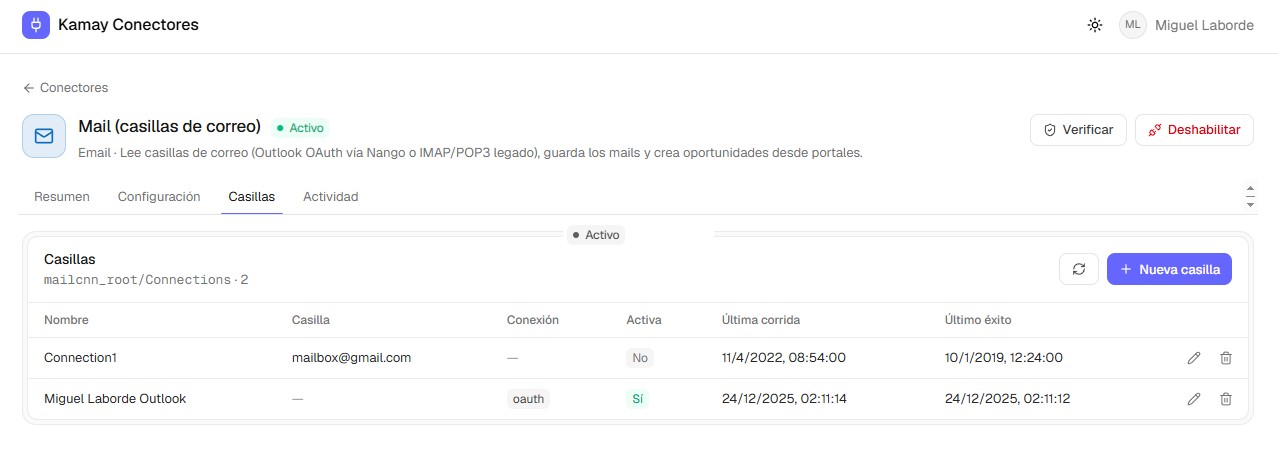
Los portales inmobiliarios, tu formulario de contacto web y muchas consultas siguen llegando por mail. El conector de Mail lee tu casilla, reconoce a los remitentes habituales (portales como ZonaProp, Mercado Libre, Argenprop, landings) y crea la oportunidad en el CRM sin que nadie tenga que reenviar ni copiar y pegar nada.
Conexión directa con tu casilla de Outlook / Microsoft 365.
Reconocimiento automático de los principales portales y formularios.
Historial del mail original siempre a mano, junto a la oportunidad que generó.
Brevo y Doppler: campañas de email con tu base siempre al día
Armar una campaña de email es mucho más simple cuando la lista de contactos se actualiza sola. Este conector sincroniza los contactos desde Kamay hacia Brevo o Doppler (la plataforma de email marketing que ya uses), con los atributos que necesites para que tus newsletters, novedades de obra o promociones lleguen siempre con la base actualizada, sin exportar planillas a mano.
PagoTIC: cobrá cuotas más rápido, sin planillas
Generá un link de pago para la cuota de un plan y mandáselo a tu cliente. Él paga online, con el medio que prefiera, desde el checkout seguro de PagoTIC — y en cuanto el pago se acredita, la cuota se marca como pagada sola en el CRM. Menos gestión manual para tu equipo de cobranzas, y una experiencia de pago mucho más simple para quien te compró.
Contractia: firmá contratos a distancia, sin papeles
No todos tus compradores pueden pasar por la oficina a firmar. Con el conector de Contractia, mandás el contrato o boleto para firma digital: el firmante se valida por SMS, email o biometría y firma desde su celular o computadora, sin imprimir ni escanear nada. Ideal para cerrar operaciones con compradores a distancia sin perder tiempo.
Portal de clientes: un lugar propio para tus inversores
Tus compradores e inversores dejan de tener que llamarte para saber cuánto deben o cómo viene su plan. El Portal de clientes les da un espacio propio donde ven sus cuotas, el avance de su inversión y pueden informar el pago de una cuota subiendo el comprobante, directo desde el celular.
Próximamente: Mercado Pago y Hubspot
Conectores Personalizados
Necesitas un conector personalizado o no ves la aplicación acá, escribinos y lo desarrollamos
¿Querés activar alguno de estos conectores en tu KamayCRM?
Escribinos por Whatsapp o escribinos por acá.
Kamay se extiende
Change Log
Como funcionan los conectores de KamayCRM
En nuestra búsqueda para proveer un excelente CRM para desarrollistas, las integraciones con otros sistemas son vitales. Sabemos que no podemos resolver todo en un solo sistema y nuestros clientes ya tienen muchos procesos subidos a distintas herramientas:
Tener presencia en los canales de comunicación mas utilizados
Flujos de mails con información del producto apenas ingresa una consulta
Mejorado de públicos para anuncios de Meta
Firmas de contratos para inversores distribuídos geográficamente
Cobro de cuotas de productos online
Por eso es que dedicamos mucho tiempo en perfeccionar integraciones con estos procesos para que las empresas tengan control de todo el proceso de sus clientes sin tener que andar pasando info de un lado a otro con Excel.
En este artículo queremos mostrar todos los beneficios y facilidades que tienen las integraciones de KamayCRM
WhatsApp: el canal de comunicación por excelencia
El WhatsApp sigue siendo la vía de contacto preferida de quien busca comprar un lote o un departamento. Con el conector de WhatsApp, esas conversaciones dejan de vivir en el celular de un vendedor y pasan a estar dentro del CRM, donde todo tu equipo las puede seguir.
Control de conversación integrado: cada mensaje queda asociado al contacto y a la oportunidad correspondiente.
Envío masivo de novedades o recordatorios con plantillas aprobadas.
Respuesta automática con un asistente de IA cuando el equipo no está disponible, para que ningún lead se enfríe.
Meta (Facebook, Instagram y Lead Ads): tus campañas, directo al CRM
Cada peso invertido en publicidad en Facebook e Instagram vale más si el lead entra solo al CRM, sin que nadie tenga que copiarlo a mano desde el Administrador de anuncios. El conector de Meta conecta tus páginas para traer los formularios de "clientes potenciales" como oportunidades nuevas, y centraliza Messenger e Instagram Direct junto con el resto de tus conversaciones.
Leads de tus campañas de Facebook e Instagram, convertidos en oportunidad automáticamente.
Mensajes de Messenger e Instagram Direct atendidos desde el mismo lugar que WhatsApp.
Un responsable (persona o asistente de IA) asignado por página, para que ninguna consulta quede sin dueño.
Feedback automático a Meta a través de la API de Conversiones con las etapas a las que llegan las leads
Sitio web: sabé por dónde pasó cada lead antes de escribirte
Un lead entra al CRM y dice apenas tres cosas: nombre, teléfono, email. El vendedor lo llama a ciegas, sin saber si es alguien que entró una vez de casualidad o alguien que estuvo tres días mirando la misma unidad. Esa información existe — pasó por tu sitio web — y este conector la trae al CRM. Se activa pegando una sola línea de código en tu web.
El recorrido completo de cada lead: de qué campaña vino, qué desarrollos miró y cuántas veces volvió antes de contactarte.
Formularios que armás desde el panel y pegás en tu web, con los datos entrando directo al CRM y sin duplicados.
Un botón de WhatsApp que reconoce de qué página vino la consulta, para que el vendedor atienda sabiendo el contexto.
¿Ya tenés formularios hechos en Elementor o Typeform? Entran al CRM sin rehacerlos.
Aviso al vendedor en el momento en que un contacto conocido vuelve a tu sitio: el mejor momento para levantar el teléfono.
Mail: Consultas por portales directo al CRM
Los portales inmobiliarios, tu formulario de contacto web y muchas consultas siguen llegando por mail. El conector de Mail lee tu casilla, reconoce a los remitentes habituales (portales como ZonaProp, Mercado Libre, Argenprop, landings) y crea la oportunidad en el CRM sin que nadie tenga que reenviar ni copiar y pegar nada.
Conexión directa con tu casilla de Outlook / Microsoft 365.
Reconocimiento automático de los principales portales y formularios.
Historial del mail original siempre a mano, junto a la oportunidad que generó.
Brevo y Doppler: campañas de email con tu base siempre al día
Armar una campaña de email es mucho más simple cuando la lista de contactos se actualiza sola. Este conector sincroniza los contactos desde Kamay hacia Brevo o Doppler (la plataforma de email marketing que ya uses), con los atributos que necesites para que tus newsletters, novedades de obra o promociones lleguen siempre con la base actualizada, sin exportar planillas a mano.
PagoTIC: cobrá cuotas más rápido, sin planillas
Generá un link de pago para la cuota de un plan y mandáselo a tu cliente. Él paga online, con el medio que prefiera, desde el checkout seguro de PagoTIC — y en cuanto el pago se acredita, la cuota se marca como pagada sola en el CRM. Menos gestión manual para tu equipo de cobranzas, y una experiencia de pago mucho más simple para quien te compró.
Contractia: firmá contratos a distancia, sin papeles
No todos tus compradores pueden pasar por la oficina a firmar. Con el conector de Contractia, mandás el contrato o boleto para firma digital: el firmante se valida por SMS, email o biometría y firma desde su celular o computadora, sin imprimir ni escanear nada. Ideal para cerrar operaciones con compradores a distancia sin perder tiempo.
Portal de clientes: un lugar propio para tus inversores
Tus compradores e inversores dejan de tener que llamarte para saber cuánto deben o cómo viene su plan. El Portal de clientes les da un espacio propio donde ven sus cuotas, el avance de su inversión y pueden informar el pago de una cuota subiendo el comprobante, directo desde el celular.
Próximamente: Mercado Pago y Hubspot
Conectores Personalizados
Necesitas un conector personalizado o no ves la aplicación acá, escribinos y lo desarrollamos
¿Querés activar alguno de estos conectores en tu KamayCRM?
Escribinos por Whatsapp o escribinos por acá.
Atención al Cliente y Postventa
Change Log
Atención al Cliente y Postventa: Fidelizá después de la entrega
La relación con el cliente no termina cuando firma el boleto. El módulo de Atención al Cliente de KamayCRM está diseñado para que la postventa sea profesional y organizada.
Gestión de Reclamos y Consultas: Centralizá todas las solicitudes de los propietarios en un solo panel. Cada reclamo queda vinculado directamente a la unidad (departamento/lote) correspondiente.
Trazabilidad Total: Desde que entra el reclamo hasta que se soluciona, queda un historial claro de quién atendió, qué se respondió y cuál fue la resolución. Ideal para medir tiempos de respuesta y mejorar la satisfacción del cliente final.
Querés saber más?
Escribinos por Whatsapp o escribinos por acá.
Atención al Cliente y Postventa
Change Log
Atención al Cliente y Postventa: Fidelizá después de la entrega
La relación con el cliente no termina cuando firma el boleto. El módulo de Atención al Cliente de KamayCRM está diseñado para que la postventa sea profesional y organizada.
Gestión de Reclamos y Consultas: Centralizá todas las solicitudes de los propietarios en un solo panel. Cada reclamo queda vinculado directamente a la unidad (departamento/lote) correspondiente.
Trazabilidad Total: Desde que entra el reclamo hasta que se soluciona, queda un historial claro de quién atendió, qué se respondió y cuál fue la resolución. Ideal para medir tiempos de respuesta y mejorar la satisfacción del cliente final.
Querés saber más?
Escribinos por Whatsapp o escribinos por acá.
Gestión de Venta Financiada
Change Log
Gestión de Financiación y Cobros
Para una desarrollista, tener financiación propia es vital, pero gestionar planes de cuotas suele ser un dolor de cabeza administrativo. KamayCRM integra la venta con la gestión financiera diaria.
Planes de Pago Activos: Cargás los planes de financiación que manejás y el sistema se encarga de proyectar los vencimientos.
Integración con PagoTIC: Automatizamos el cobro. Podés enviar links de pago directamente a tus clientes para que abonen sus cuotas. Una vez realizado el pago, el sistema lo detecta.
Recibos Automáticos: Emití recibos de forma masiva o individual sin errores de carga, manteniendo la cuenta corriente de cada cliente siempre al día y disponible para consulta.
Querés saber más?
Escribinos por Whatsapp o escribinos por acá.
Gestión de Venta Financiada
Change Log
Gestión de Financiación y Cobros
Para una desarrollista, tener financiación propia es vital, pero gestionar planes de cuotas suele ser un dolor de cabeza administrativo. KamayCRM integra la venta con la gestión financiera diaria.
Planes de Pago Activos: Cargás los planes de financiación que manejás y el sistema se encarga de proyectar los vencimientos.
Integración con PagoTIC: Automatizamos el cobro. Podés enviar links de pago directamente a tus clientes para que abonen sus cuotas. Una vez realizado el pago, el sistema lo detecta.
Recibos Automáticos: Emití recibos de forma masiva o individual sin errores de carga, manteniendo la cuenta corriente de cada cliente siempre al día y disponible para consulta.
Querés saber más?
Escribinos por Whatsapp o escribinos por acá.
Gestión de Reservas
Change Log
Generación de reservas
Cuando un cliente se decide, el tiempo es crítico. KamayCRM agiliza el proceso de reserva eliminando la carga manual de documentos legales y comerciales.
Generación Automática: Olvidate de andar copiando y pegando datos en un Word. Al momento de realizar una reserva, el sistema toma los datos del cliente, el producto elegido (unidad/lote) y la forma de pago pactada para generar el documento de reserva al instante.
Información Centralizada: Todo lo que se pacta en la reserva queda vinculado a la ficha del cliente y a la unidad, asegurando que no haya errores de comunicación entre el equipo de ventas y el administrativo.
Querés saber más?
Escribinos por Whatsapp o escribinos por acá.
Gestión de Reservas
Change Log
Generación de reservas
Cuando un cliente se decide, el tiempo es crítico. KamayCRM agiliza el proceso de reserva eliminando la carga manual de documentos legales y comerciales.
Generación Automática: Olvidate de andar copiando y pegando datos en un Word. Al momento de realizar una reserva, el sistema toma los datos del cliente, el producto elegido (unidad/lote) y la forma de pago pactada para generar el documento de reserva al instante.
Información Centralizada: Todo lo que se pacta en la reserva queda vinculado a la ficha del cliente y a la unidad, asegurando que no haya errores de comunicación entre el equipo de ventas y el administrativo.
Querés saber más?
Escribinos por Whatsapp o escribinos por acá.
Distribución automática
Change Log
Distribución Inteligente: La consulta dirigida al ejecutivo indicado
Recibir muchas consultas es solo la mitad del trabajo; la otra mitad es repartirlas de forma justa y eficiente. En KamayCRM, eliminamos la asignación manual para que el proceso sea transparente y veloz.
Equipos Especializados: Podés configurar equipos de Ventas y Postventa de forma separada. Incluso, podés armar equipos específicos según el emprendimiento (por ejemplo, un equipo para "Torre A" y otro para "Loteo B").
Asignación por Pesos (Ratios): No todos los ejecutivos tienen la misma capacidad o seniority. El sistema permite configurar cuotas de asignación: si tenés tres vendedores, podés definir que el primero reciba 2 leads, el segundo 2 y el tercero 1. El CRM hace el cálculo solo y distribuye en orden.
Sin demoras: Al automatizar la entrega, el ejecutivo recibe una notificación inmediata y el cliente es atendido en segundos, aumentando las chances de conversión.
Querés saber más?
Escribinos por Whatsapp o escribinos por acá.
Distribución automática
Change Log
Distribución Inteligente: La consulta dirigida al ejecutivo indicado
Recibir muchas consultas es solo la mitad del trabajo; la otra mitad es repartirlas de forma justa y eficiente. En KamayCRM, eliminamos la asignación manual para que el proceso sea transparente y veloz.
Equipos Especializados: Podés configurar equipos de Ventas y Postventa de forma separada. Incluso, podés armar equipos específicos según el emprendimiento (por ejemplo, un equipo para "Torre A" y otro para "Loteo B").
Asignación por Pesos (Ratios): No todos los ejecutivos tienen la misma capacidad o seniority. El sistema permite configurar cuotas de asignación: si tenés tres vendedores, podés definir que el primero reciba 2 leads, el segundo 2 y el tercero 1. El CRM hace el cálculo solo y distribuye en orden.
Sin demoras: Al automatizar la entrega, el ejecutivo recibe una notificación inmediata y el cliente es atendido en segundos, aumentando las chances de conversión.
Querés saber más?
Escribinos por Whatsapp o escribinos por acá.
Bot con Inteligencia Artificial
Change Log
Inteligencia Artificial en tu preventa: Filtrar leads y responder automáticamente
Recibir muchas consultas por WhatsApp e Instagram suena bien, hasta que te das cuenta de que tus equipos de ventas pasa el 70% del día respondiendo "¿Dónde queda el edificio?" o atendiendo reclamos de propietarios y derivando a postventa o atención al cliente.
En KamayCRM, integramos agentes de Inteligencia Artificial directamente en tus canales de atención para que tus vendedores se enfoquen solo en cerrar boletos.
1. Clasificación inicial: ¿Venta o Postventa?
No todos los que escriben quieren comprar hoy. La IA de KamayCRM analiza el mensaje de entrada y clasifica la conversación automáticamente:
Perfil Venta: Si es un interesado nuevo, el bot lo identifica y lo deriva al equipo comercial con la información lista para el cierre.
Perfil Postventa: Si es un cliente existente con una duda técnica o un reclamo, el sistema lo etiqueta y lo dirige al área correspondiente. Resultado: Tu equipo de ventas deja de "limpiar" la base y se dedica a vender.
2. Base de Conocimiento de ventas
Lo más potente de nuestra IA es que está conectada a una Base de Conocimiento alimentada con la información real de tus desarrollos:
Ubicación exacta y cercanías.
Amenities y características técnicas.
Plazos de entrega y tipos de financiación.
Si un cliente pregunta a las 3 de la mañana si el edificio de la calle Colón tiene pileta o cocheras disponibles, la IA le responde con precisión quirúrgica basada en los datos de tu empresa.
3. Disponibilidad total, respuesta inmediata
En el mundo desarrollista, el que responde primero tiene más posibilidades de cerrar la venta. Con los bots de KamayCRM, garantizás que ningún lead se enfríe por falta de respuesta, sin importar el día o la hora. El bot mantiene la charla, resuelve las dudas básicas y deja el camino allanado para que el ejecutivo humano dé la estocada final.
Escribinos por Whatsapp o escribinos por acá.
Bot con Inteligencia Artificial
Change Log
Inteligencia Artificial en tu preventa: Filtrar leads y responder automáticamente
Recibir muchas consultas por WhatsApp e Instagram suena bien, hasta que te das cuenta de que tus equipos de ventas pasa el 70% del día respondiendo "¿Dónde queda el edificio?" o atendiendo reclamos de propietarios y derivando a postventa o atención al cliente.
En KamayCRM, integramos agentes de Inteligencia Artificial directamente en tus canales de atención para que tus vendedores se enfoquen solo en cerrar boletos.
1. Clasificación inicial: ¿Venta o Postventa?
No todos los que escriben quieren comprar hoy. La IA de KamayCRM analiza el mensaje de entrada y clasifica la conversación automáticamente:
Perfil Venta: Si es un interesado nuevo, el bot lo identifica y lo deriva al equipo comercial con la información lista para el cierre.
Perfil Postventa: Si es un cliente existente con una duda técnica o un reclamo, el sistema lo etiqueta y lo dirige al área correspondiente. Resultado: Tu equipo de ventas deja de "limpiar" la base y se dedica a vender.
2. Base de Conocimiento de ventas
Lo más potente de nuestra IA es que está conectada a una Base de Conocimiento alimentada con la información real de tus desarrollos:
Ubicación exacta y cercanías.
Amenities y características técnicas.
Plazos de entrega y tipos de financiación.
Si un cliente pregunta a las 3 de la mañana si el edificio de la calle Colón tiene pileta o cocheras disponibles, la IA le responde con precisión quirúrgica basada en los datos de tu empresa.
3. Disponibilidad total, respuesta inmediata
En el mundo desarrollista, el que responde primero tiene más posibilidades de cerrar la venta. Con los bots de KamayCRM, garantizás que ningún lead se enfríe por falta de respuesta, sin importar el día o la hora. El bot mantiene la charla, resuelve las dudas básicas y deja el camino allanado para que el ejecutivo humano dé la estocada final.
Escribinos por Whatsapp o escribinos por acá.
Captura de consultas
Change Log
Centralizá todas tus consultas en un solo lugar con KamayCRM
Si estás en el rubro desarrollista, sabés que el tiempo es oro. Un cliente que pregunta por un lote o un departamento y no recibe respuesta en 10 minutos, es un cliente que se enfría o se va con la competencia. El problema es que hoy las consultas llueven por todos lados: WhatsApp, Instagram, portales, formularios web... un caos.
En KamayCRM diseñamos un sistema de Captura de Consultas para que no se te escape ni un solo interesado. Así es como funciona:
1. Conexión total con el ecosistema Meta
Olvidate de que tus ejecutivos tengan que andar saltando de una app a otra. KamayCRM está integrado directamente con Meta.
WhatsApp, Instagram Direct y Messenger: Todo entra automáticamente al sistema.
Respuesta inmediata: Tus vendedores responden desde el CRM, pero el cliente recibe el mensaje en el canal donde inició la charla. Todo centralizado, ordenado y con trazabilidad.
2. Captura automática desde Portales Inmobiliarios
Sabemos que ponés mucha guita en publicidad en portales. Por eso, KamayCRM "barre" y captura automáticamente los mails de consultas que te envían plataformas como:
ZonaProp
MercadoLibre
Properati
Argenprop
Y varias más. El lead entra al CRM antes de que termines de leer el aviso de mail.
3. Tu web y tus apps, conectadas
¿Tenés un formulario de contacto en tu landing page o una aplicación propia?
Formularios y Webhooks: Te damos las herramientas para que cualquier consulta externa impacte directo en la bandeja de entrada de tus ejecutivos. Sin intervención manual, sin errores de carga.
El resultado: Más velocidad, más ventas
Al centralizar la captura, tus ejecutivos dejan de perder tiempo buscando mensajes y se enfocan en lo que mejor saben hacer: vender. Todo queda registrado en el historial del cliente, sin importar si te escribió por WhatsApp hoy y por mail mañana.
Escribinos por Whatsapp o escribinos por acá.
Captura de consultas
Change Log
Centralizá todas tus consultas en un solo lugar con KamayCRM
Si estás en el rubro desarrollista, sabés que el tiempo es oro. Un cliente que pregunta por un lote o un departamento y no recibe respuesta en 10 minutos, es un cliente que se enfría o se va con la competencia. El problema es que hoy las consultas llueven por todos lados: WhatsApp, Instagram, portales, formularios web... un caos.
En KamayCRM diseñamos un sistema de Captura de Consultas para que no se te escape ni un solo interesado. Así es como funciona:
1. Conexión total con el ecosistema Meta
Olvidate de que tus ejecutivos tengan que andar saltando de una app a otra. KamayCRM está integrado directamente con Meta.
WhatsApp, Instagram Direct y Messenger: Todo entra automáticamente al sistema.
Respuesta inmediata: Tus vendedores responden desde el CRM, pero el cliente recibe el mensaje en el canal donde inició la charla. Todo centralizado, ordenado y con trazabilidad.
2. Captura automática desde Portales Inmobiliarios
Sabemos que ponés mucha guita en publicidad en portales. Por eso, KamayCRM "barre" y captura automáticamente los mails de consultas que te envían plataformas como:
ZonaProp
MercadoLibre
Properati
Argenprop
Y varias más. El lead entra al CRM antes de que termines de leer el aviso de mail.
3. Tu web y tus apps, conectadas
¿Tenés un formulario de contacto en tu landing page o una aplicación propia?
Formularios y Webhooks: Te damos las herramientas para que cualquier consulta externa impacte directo en la bandeja de entrada de tus ejecutivos. Sin intervención manual, sin errores de carga.
El resultado: Más velocidad, más ventas
Al centralizar la captura, tus ejecutivos dejan de perder tiempo buscando mensajes y se enfocan en lo que mejor saben hacer: vender. Todo queda registrado en el historial del cliente, sin importar si te escribió por WhatsApp hoy y por mail mañana.
Escribinos por Whatsapp o escribinos por acá.
Politicas de privacidad - Google Auth
Change Log
Como funciona el inicio de sesión con Google en KamayCRM
Inicio de Sesión con Google
Para facilitar el acceso y mejorar la seguridad, nuestra plataforma permite iniciar sesión utilizando tu cuenta de Google. Cuando elegís esta opción, Google se encarga de verificar tu identidad y nos confirma que sos vos quien está intentando ingresar. Nosotros no vemos ni almacenamos tu contraseña de Google; solo recibimos la información básica necesaria para identificar tu cuenta dentro del sistema.
Política de Privacidad – Inicio de Sesión con Google
Última actualización: 2026-02-17
1. Introducción
Esta Política de Privacidad describe cómo [Nombre de tu empresa / CRM SaaS] ("la Plataforma") recopila, utiliza y protege la información obtenida a través del inicio de sesión con Google mediante el sistema de autenticación OAuth proporcionado por Google.
Al utilizar el inicio de sesión con Google, aceptás los términos de esta política.
2. Información que recopilamos a través de Google
Cuando el usuario inicia sesión utilizando su cuenta de Google, recibimos únicamente la siguiente información básica del perfil:
Nombre completo
Dirección de correo electrónico
ID único de usuario de Google
Imagen de perfil (si estuviera disponible)
No solicitamos acceso a:
Correos electrónicos
Contactos
Archivos de Google Drive
Calendario
Ningún otro dato sensible
3. Finalidad del uso de la información
La información obtenida mediante Google OAuth se utiliza exclusivamente para:
Crear y autenticar la cuenta del usuario en la Plataforma
Permitir el acceso seguro al CRM
Identificar al usuario dentro del sistema
No utilizamos esta información para enviar publicidad no solicitada ni la compartimos con terceros con fines comerciales.
4. Almacenamiento y seguridad
Los datos recibidos se almacenan de forma segura en nuestros servidores y se protegen mediante medidas técnicas y organizativas adecuadas para evitar accesos no autorizados, alteraciones o divulgación indebida.
La autenticación se realiza mediante el protocolo OAuth 2.0 proporcionado por Google.
5. Compartición de datos
No vendemos, alquilamos ni compartimos la información personal obtenida a través de Google con terceros, salvo cuando sea requerido por ley.
6. Revocación de acceso
El usuario puede revocar el acceso otorgado a la Plataforma en cualquier momento desde:
Panel de permisos de su cuenta de Google:
https://myaccount.google.com/permissions
Una vez revocado el acceso, el usuario no podrá iniciar sesión con Google hasta volver a autorizar la aplicación.
7. Eliminación de datos
El usuario puede solicitar la eliminación de su cuenta y los datos asociados enviando un correo a: [email de contacto].
Una vez recibida la solicitud, eliminaremos los datos personales en un plazo razonable, salvo obligación legal de conservación.
8. Contacto
Para consultas relacionadas con esta Política de Privacidad, podés contactarnos en:
Email: atencionalcliente@kamaycrm.com
Sitio web: https://kamaycrm.com
Politicas de privacidad - Google Auth
Change Log
Como funciona el inicio de sesión con Google en KamayCRM
Inicio de Sesión con Google
Para facilitar el acceso y mejorar la seguridad, nuestra plataforma permite iniciar sesión utilizando tu cuenta de Google. Cuando elegís esta opción, Google se encarga de verificar tu identidad y nos confirma que sos vos quien está intentando ingresar. Nosotros no vemos ni almacenamos tu contraseña de Google; solo recibimos la información básica necesaria para identificar tu cuenta dentro del sistema.
Política de Privacidad – Inicio de Sesión con Google
Última actualización: 2026-02-17
1. Introducción
Esta Política de Privacidad describe cómo [Nombre de tu empresa / CRM SaaS] ("la Plataforma") recopila, utiliza y protege la información obtenida a través del inicio de sesión con Google mediante el sistema de autenticación OAuth proporcionado por Google.
Al utilizar el inicio de sesión con Google, aceptás los términos de esta política.
2. Información que recopilamos a través de Google
Cuando el usuario inicia sesión utilizando su cuenta de Google, recibimos únicamente la siguiente información básica del perfil:
Nombre completo
Dirección de correo electrónico
ID único de usuario de Google
Imagen de perfil (si estuviera disponible)
No solicitamos acceso a:
Correos electrónicos
Contactos
Archivos de Google Drive
Calendario
Ningún otro dato sensible
3. Finalidad del uso de la información
La información obtenida mediante Google OAuth se utiliza exclusivamente para:
Crear y autenticar la cuenta del usuario en la Plataforma
Permitir el acceso seguro al CRM
Identificar al usuario dentro del sistema
No utilizamos esta información para enviar publicidad no solicitada ni la compartimos con terceros con fines comerciales.
4. Almacenamiento y seguridad
Los datos recibidos se almacenan de forma segura en nuestros servidores y se protegen mediante medidas técnicas y organizativas adecuadas para evitar accesos no autorizados, alteraciones o divulgación indebida.
La autenticación se realiza mediante el protocolo OAuth 2.0 proporcionado por Google.
5. Compartición de datos
No vendemos, alquilamos ni compartimos la información personal obtenida a través de Google con terceros, salvo cuando sea requerido por ley.
6. Revocación de acceso
El usuario puede revocar el acceso otorgado a la Plataforma en cualquier momento desde:
Panel de permisos de su cuenta de Google:
https://myaccount.google.com/permissions
Una vez revocado el acceso, el usuario no podrá iniciar sesión con Google hasta volver a autorizar la aplicación.
7. Eliminación de datos
El usuario puede solicitar la eliminación de su cuenta y los datos asociados enviando un correo a: [email de contacto].
Una vez recibida la solicitud, eliminaremos los datos personales en un plazo razonable, salvo obligación legal de conservación.
8. Contacto
Para consultas relacionadas con esta Política de Privacidad, podés contactarnos en:
Email: atencionalcliente@kamaycrm.com
Sitio web: https://kamaycrm.com
Potencia tu estrategia de comunicación
Change Log
Así funciona la integración oficial de KamayCRM con Meta
En el entorno digital actual, la velocidad de respuesta no es un lujo, es el estándar. En KamayCRM, una de las funcionalidades más valoradas por nuestros usuarios es la capacidad de centralizar todo el ecosistema de Meta (Facebook, Instagram y WhatsApp) en un solo flujo de trabajo.
Si aún no estás aprovechando al máximo esta conexión, aquí te explicamos cómo esta integración oficial transforma la gestión diaria de tus leads y conversaciones.
Centralización sin fisuras
La integración conecta directamente la infraestructura de KamayCRM con las APIs oficiales de Meta. Esto elimina la necesidad de herramientas de terceros, garantizando que la información fluya de manera segura y sin interrupciones.
1. Automatización de Leads (Facebook & Instagram Ads)
Cómo funciona: Cuando un usuario completa un formulario en tus anuncios (Lead Ads), KamayCRM lo captura en tiempo real.
El beneficio: El contacto se crea instantáneamente en tu embudo de ventas y se puede asignar a un asesor automáticamente. Contactar a un lead en el primer minuto aumenta exponencialmente la tasa de cierre.
2. WhatsApp Business API: Control y Escala No lleves las conversaciones con tus clientes en el WhatsApp personal de cada vendedor.
La solución: Nuestra integración permite que todo tu equipo utilice una misma línea corporativa.
El beneficio: Tienes supervisión total de las conversaciones, uso de plantillas pre-aprobadas para iniciar chats y, lo más importante, todo el historial queda guardado en la ficha del cliente dentro del CRM.
3. Inbox Unificado (Messenger, Instagram y Whatsapp) Tus clientes esperan respuestas inmediatas, sin importar por dónde escriban.
La capacidad: Recibe y responde mensajes directos (DM) de Instagram, Messenger y Whatsapp desde la misma bandeja de entrada de KamayCRM. No más cambios de pestañas ni mensajes perdidos en el "Solicitudes de mensajes".
¿Por qué integración oficial?
A diferencia de soluciones no oficiales o extensiones de navegador, la conexión vía API Oficial de Meta que utilizamos en KamayCRM garantiza estabilidad a largo plazo y cumplimiento normativo (GDPR y políticas de Meta), protegiendo la reputación de tu línea de WhatsApp y tus cuentas publicitarias.
Política de Privacidad y Términos de Uso de la Aplicación
Para garantizar la transparencia y el cumplimiento de las normativas de Meta, detallamos a continuación los términos que rigen el uso de esta integración en nuestra plataforma.
Política de Privacidad de la Integración Meta en KamayCRM
1. Recopilación de Datos KamayCRM accede a los datos de los usuarios ("Datos de la Plataforma") exclusivamente bajo la autorización explícita del cliente mediante el inicio de sesión con Facebook/Meta (OAuth). Los datos procesados incluyen:
Información básica del perfil (Nombre, ID).
Datos ingresados por clientes finales en formularios de clientes potenciales (Lead Ads).
Contenido de mensajes e interacciones provenientes de páginas de Facebook, cuentas de Instagram Business y WhatsApp Business vinculados.
2. Uso de la Información El objetivo de esta integración es estrictamente operativo para la gestión de relaciones con clientes (CRM). KamayCRM utiliza estos datos para:
La creación automática y enriquecimiento de fichas de contacto.
La gestión y respuesta de mensajería unificada dentro de la plataforma.
La generación de métricas y reportes de rendimiento comercial.
3. Privacidad y No Comercialización KamayCRM no vende, cede ni comercializa a terceros los datos obtenidos a través de las APIs de Meta. Los datos pertenecen al cliente y se utilizan únicamente para proveer el servicio contratado.
4. Eliminación de Datos (Data Deletion) Los datos se conservan mientras el servicio esté activo. De acuerdo con las normativas de la plataforma, el usuario puede solicitar la eliminación total de sus datos sincronizados en cualquier momento. Esto puede realizarse desconectando la integración desde el panel de control de KamayCRM o contactando a nuestro equipo de soporte, lo cual eliminará los tokens de acceso y la información asociada.
Términos y Condiciones de Uso de la Integración
1. Aceptación Al vincular sus activos de Meta (Páginas, Cuentas Publicitarias, Cuentas de WhatsApp) con KamayCRM, el usuario acepta estos términos y se compromete a cumplir con las Políticas de la Plataforma de Meta y la Política de Comercio de WhatsApp.
2. Uso Aceptable La integración debe utilizarse para la gestión legítima de comunicaciones comerciales. Queda estrictamente prohibido:
El uso de la plataforma para envío de SPAM o comunicaciones no deseadas.
La recolección de datos sin el consentimiento informado del usuario final.
El uso de la API para fines que violen la propiedad intelectual o la legalidad vigente.
3. Limitación de Responsabilidad KamayCRM provee la infraestructura tecnológica para la gestión de datos. El usuario es el único responsable del contenido de los mensajes enviados y del tratamiento de los datos de sus propios clientes. KamayCRM no se responsabiliza por suspensiones de cuentas de Meta derivadas del mal uso de las mismas por parte del usuario.
Potencia tu estrategia de comunicación
Change Log
Así funciona la integración oficial de KamayCRM con Meta
En el entorno digital actual, la velocidad de respuesta no es un lujo, es el estándar. En KamayCRM, una de las funcionalidades más valoradas por nuestros usuarios es la capacidad de centralizar todo el ecosistema de Meta (Facebook, Instagram y WhatsApp) en un solo flujo de trabajo.
Si aún no estás aprovechando al máximo esta conexión, aquí te explicamos cómo esta integración oficial transforma la gestión diaria de tus leads y conversaciones.
Centralización sin fisuras
La integración conecta directamente la infraestructura de KamayCRM con las APIs oficiales de Meta. Esto elimina la necesidad de herramientas de terceros, garantizando que la información fluya de manera segura y sin interrupciones.
1. Automatización de Leads (Facebook & Instagram Ads)
Cómo funciona: Cuando un usuario completa un formulario en tus anuncios (Lead Ads), KamayCRM lo captura en tiempo real.
El beneficio: El contacto se crea instantáneamente en tu embudo de ventas y se puede asignar a un asesor automáticamente. Contactar a un lead en el primer minuto aumenta exponencialmente la tasa de cierre.
2. WhatsApp Business API: Control y Escala No lleves las conversaciones con tus clientes en el WhatsApp personal de cada vendedor.
La solución: Nuestra integración permite que todo tu equipo utilice una misma línea corporativa.
El beneficio: Tienes supervisión total de las conversaciones, uso de plantillas pre-aprobadas para iniciar chats y, lo más importante, todo el historial queda guardado en la ficha del cliente dentro del CRM.
3. Inbox Unificado (Messenger, Instagram y Whatsapp) Tus clientes esperan respuestas inmediatas, sin importar por dónde escriban.
La capacidad: Recibe y responde mensajes directos (DM) de Instagram, Messenger y Whatsapp desde la misma bandeja de entrada de KamayCRM. No más cambios de pestañas ni mensajes perdidos en el "Solicitudes de mensajes".
¿Por qué integración oficial?
A diferencia de soluciones no oficiales o extensiones de navegador, la conexión vía API Oficial de Meta que utilizamos en KamayCRM garantiza estabilidad a largo plazo y cumplimiento normativo (GDPR y políticas de Meta), protegiendo la reputación de tu línea de WhatsApp y tus cuentas publicitarias.
Política de Privacidad y Términos de Uso de la Aplicación
Para garantizar la transparencia y el cumplimiento de las normativas de Meta, detallamos a continuación los términos que rigen el uso de esta integración en nuestra plataforma.
Política de Privacidad de la Integración Meta en KamayCRM
1. Recopilación de Datos KamayCRM accede a los datos de los usuarios ("Datos de la Plataforma") exclusivamente bajo la autorización explícita del cliente mediante el inicio de sesión con Facebook/Meta (OAuth). Los datos procesados incluyen:
Información básica del perfil (Nombre, ID).
Datos ingresados por clientes finales en formularios de clientes potenciales (Lead Ads).
Contenido de mensajes e interacciones provenientes de páginas de Facebook, cuentas de Instagram Business y WhatsApp Business vinculados.
2. Uso de la Información El objetivo de esta integración es estrictamente operativo para la gestión de relaciones con clientes (CRM). KamayCRM utiliza estos datos para:
La creación automática y enriquecimiento de fichas de contacto.
La gestión y respuesta de mensajería unificada dentro de la plataforma.
La generación de métricas y reportes de rendimiento comercial.
3. Privacidad y No Comercialización KamayCRM no vende, cede ni comercializa a terceros los datos obtenidos a través de las APIs de Meta. Los datos pertenecen al cliente y se utilizan únicamente para proveer el servicio contratado.
4. Eliminación de Datos (Data Deletion) Los datos se conservan mientras el servicio esté activo. De acuerdo con las normativas de la plataforma, el usuario puede solicitar la eliminación total de sus datos sincronizados en cualquier momento. Esto puede realizarse desconectando la integración desde el panel de control de KamayCRM o contactando a nuestro equipo de soporte, lo cual eliminará los tokens de acceso y la información asociada.
Términos y Condiciones de Uso de la Integración
1. Aceptación Al vincular sus activos de Meta (Páginas, Cuentas Publicitarias, Cuentas de WhatsApp) con KamayCRM, el usuario acepta estos términos y se compromete a cumplir con las Políticas de la Plataforma de Meta y la Política de Comercio de WhatsApp.
2. Uso Aceptable La integración debe utilizarse para la gestión legítima de comunicaciones comerciales. Queda estrictamente prohibido:
El uso de la plataforma para envío de SPAM o comunicaciones no deseadas.
La recolección de datos sin el consentimiento informado del usuario final.
El uso de la API para fines que violen la propiedad intelectual o la legalidad vigente.
3. Limitación de Responsabilidad KamayCRM provee la infraestructura tecnológica para la gestión de datos. El usuario es el único responsable del contenido de los mensajes enviados y del tratamiento de los datos de sus propios clientes. KamayCRM no se responsabiliza por suspensiones de cuentas de Meta derivadas del mal uso de las mismas por parte del usuario.
No sos desarrollista, pero te interesa nuestro CRM?
Si bien está diseñado para desarrollistas, nuestro CRM no es enlatado y puede adaptarse a tus necesidades.
No sos desarrollista, pero te interesa nuestro CRM?
Si bien está diseñado para desarrollistas, nuestro CRM no es enlatado y puede adaptarse a tus necesidades.
No sos desarrollista, pero te interesa nuestro CRM?
Si bien está diseñado para desarrollistas, nuestro CRM no es enlatado y puede adaptarse a tus necesidades.